Decorcurate
Stained Glass Freesia Stems – White & Purple
Stained Glass Freesia Stems – White & Purple
Couldn't load pickup availability
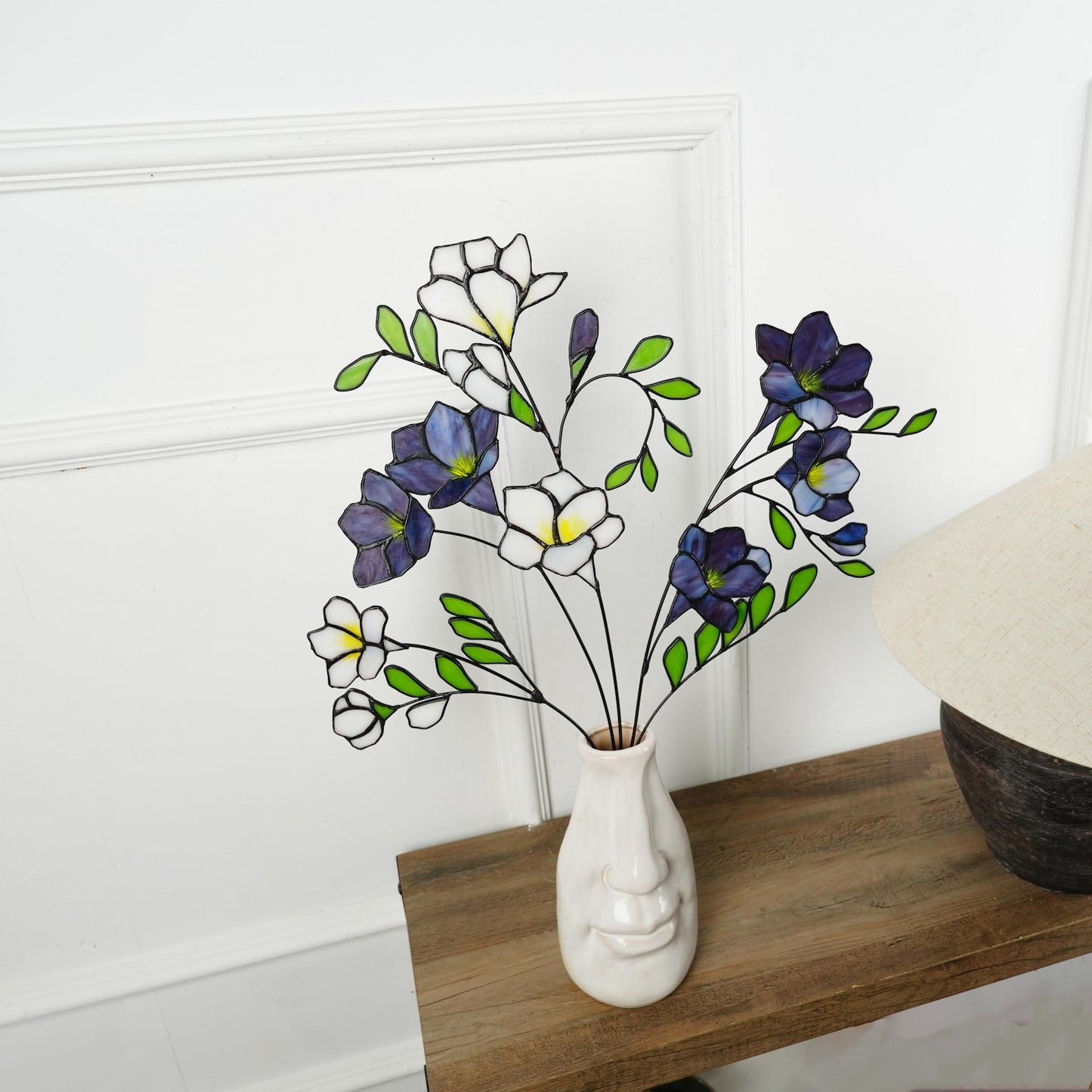
Fill your home with the delicate elegance of freesia in bloom — without ever needing water. This handcrafted stained glass freesia bouquet in white and purple is designed for indoor display and brings a jewel-like quality to any shelf, windowsill, or vase arrangement.
Craftsmanship
Each stem carries multiple funnel-shaped blooms with a yellow throat and bud clusters, paired with small green leaves along the stem. Petals, leaves, and bud cases are individually cut from art glass and joined with copper-foil seams using the traditional Tiffany copper-foil method. Stems are wire and can be bent gently to adjust the bouquet shape.
Display & Light
When placed near a window, light passes through the translucent glass — the white blooms read as creamy ivory while the purple blooms range from violet to deep blue depending on the angle. No water, soil, or maintenance needed.
Weight & Stability Note
Stained glass is heavier than fabric or paper flowers. Use a stable, weighted vase or one with a narrow neck so the bouquet stays upright. A lightweight or top-heavy vase is likely to tip.
What's Included
- Multiple freesia stems in white and purple
The ceramic vase, lamp, and framed photo shown in the lifestyle image are not included.
Specifications
- Material (petals and leaves): Stained glass, copper-foil construction
- Material (stems): Bendable wire
- Colors: White with yellow throat; purple with yellow throat; green leaves
- Use: Indoor decor
Care Instructions
Dust with a soft dry cloth or compressed air. Do not submerge in water. Glass petals can chip or crack if knocked. Avoid prolonged moisture — wire and solder seams can corrode.
Note: Each piece is cut and assembled by hand. Slight differences in petal shape, seam thickness, and color saturation between stems are normal and not defects.
Share